product development · engineering leadership · collaboration
A successful project is not yet a successful product
A team can meet every requirement and deliver a high-quality solution, but that alone is not enough to make a product successful.
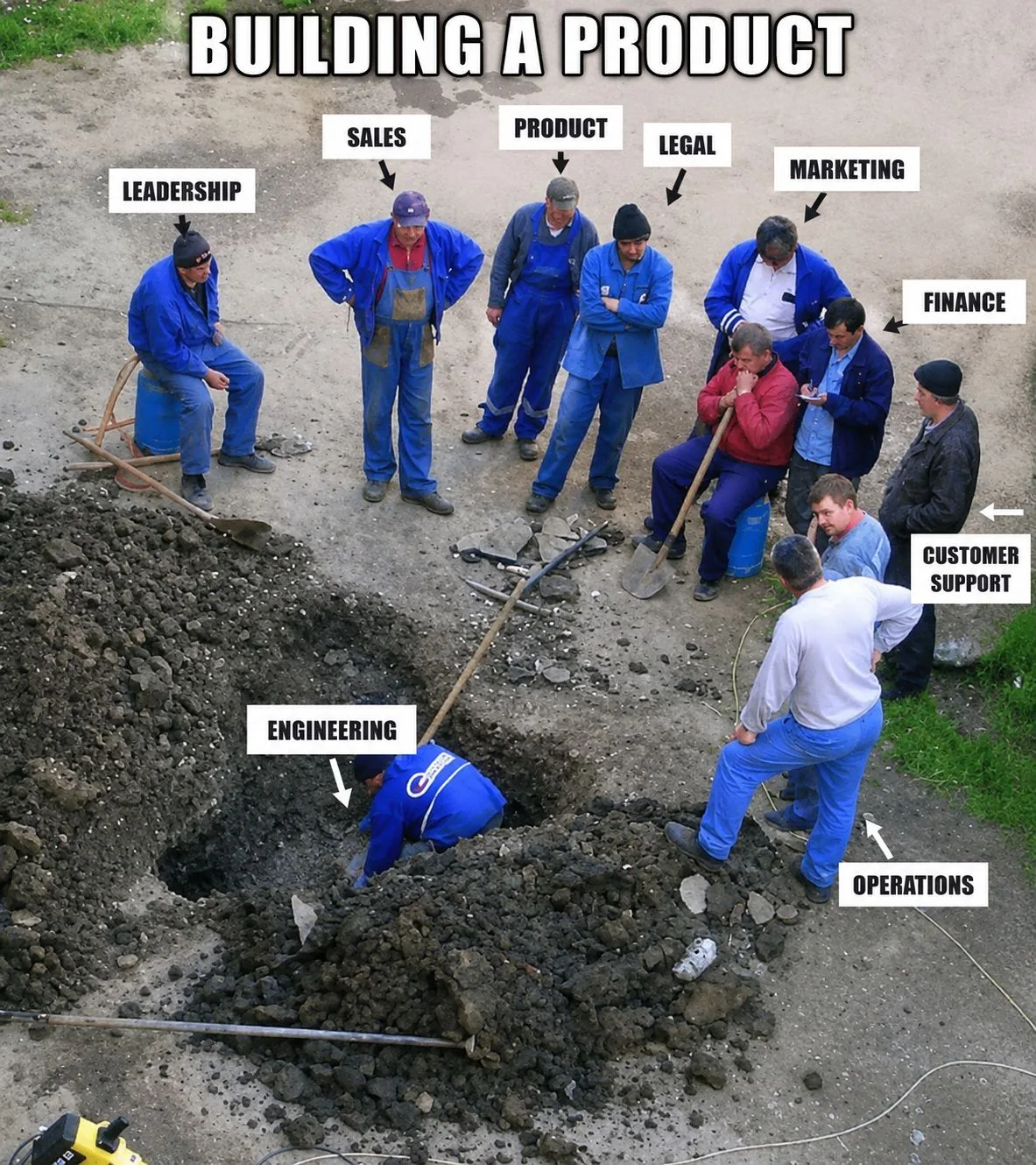
Over the course of my career, I have seen at least four projects that could reasonably be called successful.
The requirements were implemented. The quality was good. The UX was decent. The team delivered what it had promised.
Yet none of them became a successful product.
They all reached roughly the same point – go-live – and stalled somewhere around it.
In one case, marketing spent a long time aligning on how to introduce the product to the market. In another, the project became stuck in legal processes. Elsewhere, business priorities changed during development and the initiative was stopped.
A team can execute a project flawlessly, but that does not mean the product will ever reach the customer.
Perhaps the problem is that we too often imagine product development as a relay race: product defines the need, engineering writes the code, and only then do marketing, sales, legal, finance, operations, and support join in.
In reality, a product is not a relay race. It is a shared effort in which all these functions need to move in the same direction long before anyone is ready to press “Go Live.”
That is why the hardest challenge is often not writing the code. It begins with agreeing on what we are building, why we are building it, how the product will reach the market, and what must happen before customers can actually use it.
This is also why much of my consulting work is not about technology. It involves helping different sides understand one another, surface unspoken assumptions, align expectations, and find a shared direction.
Because a good product is not simply the result of good engineering.
It emerges when the whole organization can bring it to the customer together.